
Technology
The Tech Convergence That Made Golf Livestreaming Inevitable

Andrew Shallcross
For years, the idea of livestreaming a golf course sounded great in theory—but impractical in reality.
The challenges were obvious. Cameras weren’t reliable enough. Internet connectivity across a course was inconsistent at best. And even if you could capture the footage, distributing it in a scalable, affordable way was a different problem entirely.
So most courses didn’t bother.
But something changed.
Over the past few years, a quiet convergence of technologies has removed every major barrier that once made golf livestreaming difficult. What used to require massive budgets and complex infrastructure can now be deployed quickly, affordably, and at scale.
And that shift is opening the door to something much bigger than just video—it’s turning golf courses into an untapped golf media machine.
Moore’s Law and the Cost Collapse of Technology
In the 1960s, Intel co-founder and avid golfer Gordon Moore observed that the number of transistors on an integrated circuit would double roughly every two years—a principle now known as Moore’s Law.
Fast forward to today, and that exponential growth has transformed nearly every aspect of modern life.
The same computer chips power:
- The device you’re reading this on
- The electronics in your home
- The rangefinder in your golf bag
- And now, golf course livestream systems
This exponential improvement didn’t just increase performance—it dramatically reduced cost.
As a result, the price of:
- Cameras
- Internet infrastructure
- Data centers
- Wireless networking
has dropped to a fraction of what it once was.
That cost collapse is the foundation that makes modern golf course livestreaming possible.
The Convergence: Cameras, Connectivity and Cloud Computing
4K Livestreaming Cameras
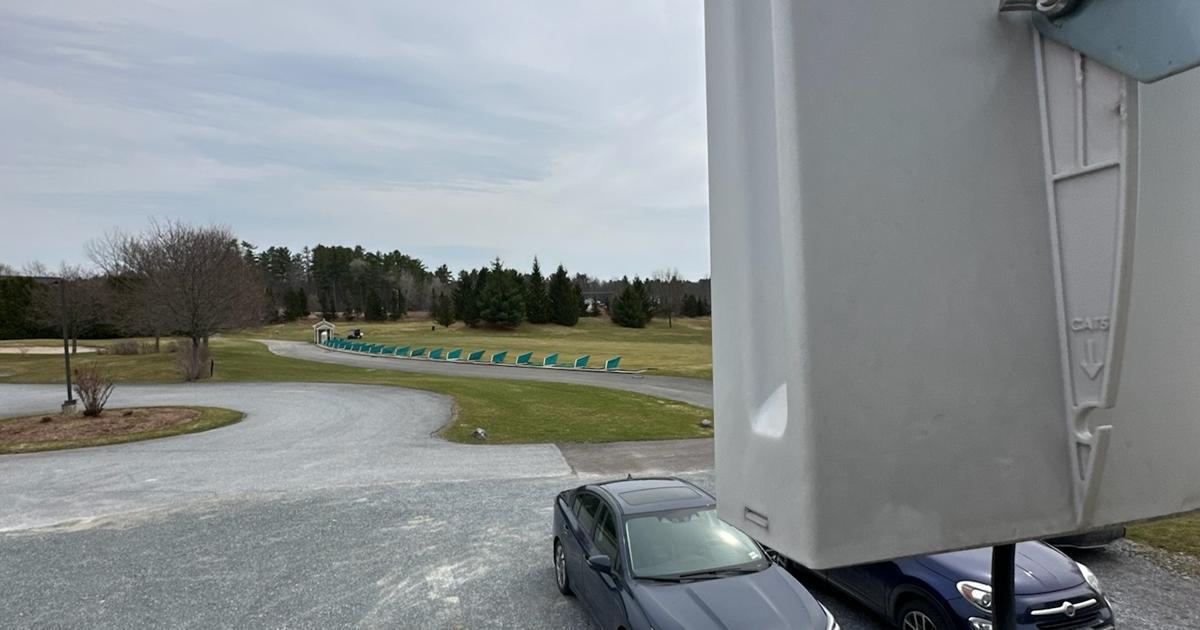
Twenty years ago, a 4K camera cost tens of thousands of dollars and fit inside a large suitcase. Today, they start at $150 and fit in the palm of your hand. Additionally, outdoor livestream cameras are everything a golf course requires for an outdoor livestream system:
- Weatherproof: through rain, snow and heat
- HD: crisp enough to capture swings in beautiful detail
- Accessible: remotely controllable from anywhere
- Workhorses: built for continuous operation
This matters because golf environments are hard. You’re not installing inside a building—you’re dealing with distance, exposure, and changing conditions.
Today’s cameras are finally built for that reality.
Connectivity
Twenty years ago, 1 Mbps of bandwidth cost you $5. Today, it's ~$0.05; a decease of 99%. Prior to this advancement in the pipes that power the internet - and Wi-Fi technology - the costs to provide connectivity across a golf course were an instant dead-end. Today, this extremely low-connectivity cost unlocks the ability to deploy a golf livestreaming system to any tee box, fairway, green or driving range.
Courses can now:
- Extend internet across the property via dense golf course Wi-Fi networks
- Maintain stable video feeds
- Avoid trenching and major construction ($$$$$$)
In other words, the course is no longer “offline.”
Cloud Computing
Twenty years ago, if you wanted to run a content distribution service, you would have had to physically buy and manage the servers, costing you a fortune—almost enough to buy a golf course! Fast forward to 2026, and the cost of computing has decreased over 1000x. You no longer need to buy the physical infrastructure; you can rent it on the cheap with cloud computing.
Even if you could capture and transmit video in the past, distribution was a nightmare. YouTube was barely a year old twenty years ago; now there are hundreds of cloud services available to distribute your livestream content.
Now, modern video streaming platforms handle:
- Video encoding
- Global distribution
- Playback across devices
- Scalability as viewership grows
This removes the need for on-site servers or complex setups. What once required a dedicated engineering team can now be done with a small team of 1-2 motivated people. The heavy lifting happens in the cloud - not on the course.
Why This Moment Matters for Golf Courses
Individually, none of these technologies are new.
But together, they’ve reached a tipping point.
For the first time, golf course livestream systems are:
- Affordable
- Reliable
- Scalable
- Easy to deploy
This isn’t just a technology upgrade—it’s a shift in what a golf course can be.
Courses are no longer just physical venues. They can become always-on digital platforms that:
- Attract new players
- Engage their community
- Generate sponsorship revenue
- Extend their reach beyond the property
Final Thought
The technology is no longer the barrier. Awareness is.
The courses that recognize this shift early won’t just be adding a new feature—they’ll be building a new revenue channel. One that turns their course into a golf media platform.
Even with all these advancements, it's still an uphill climb. Identifying the need for a golf livestream is one thing, but implementing one is something else entirely—especially for golf courses bogged down by the regular day-to-day chaos of running a business.
Luckily, you don't have to figure it out. Fore.tv will do it for you.
Curious what a golf course livestream system would look like at your course? Let's chat.